Fox Ledger / Entries / Records
What records does a sole trader have to keep, and for how long?
Posted by the editors. Figures stated by tax year.
Keep a record of every sale and piece of business income, every business expense and your personal income, along with VAT and PAYE records if those apply to you. GOV.UK says to hold them for at least five years after the 31 January submission deadline for the tax year concerned. For the 2025 to 2026 tax year, that means until at least the end of January 2032.
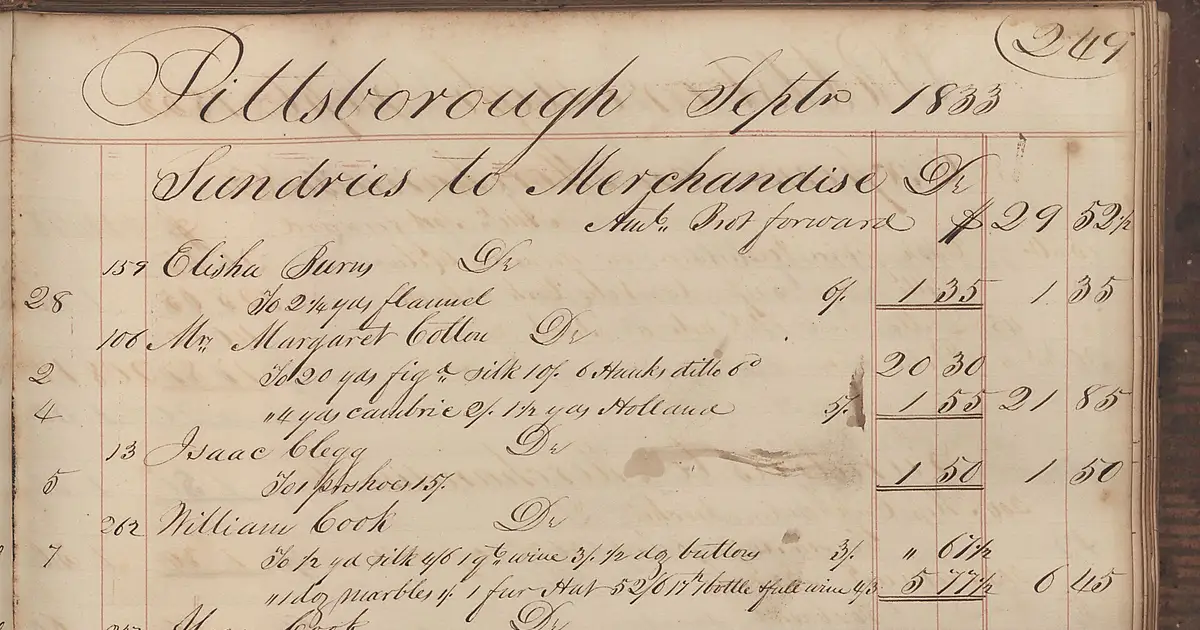

None of it goes to HM Revenue and Customs with your return. GOV.UK explains that the records exist so you can work out your profit or loss, and so you can show them to HMRC if asked. They must be accurate, and you must be able to pick out the business transactions from everything else. That second part is why so many sole traders open a separate bank account for the business, even though the pages cited here do not demand one.
What belongs in the book
The GOV.UK list is short. The work lies in the proof behind each line, so here it is sorted the way a bookkeeper would sort it: the kind of record, then the paper that backs it up.
| Record | Typical proof | Applies to |
|---|---|---|
| All sales and income | Sales invoices, till rolls, bank slips, bank statements | Every sole trader |
| All business expenses | Receipts for goods and stock, bank statements, chequebook stubs | Every sole trader |
| Personal income | Records of your other income, kept apart from the business figures | Every sole trader |
| VAT records | As set out in the VAT guidance | If VAT registered |
| PAYE records | As set out in the employer guidance | If you employ people |
| Self-Employment Income Support Scheme grants | A note of what you were paid | If you claimed |
Choosing traditional accounting adds to the pile. You also need to track money owed to you and not yet received, money you have committed to spend but not yet paid, the value of stock and work in progress at the end of the accounting period, year-end bank balances, what you put into the business during the year and what you took out for your own use. We compare the two methods in cash basis or traditional accounting, and for most very small businesses that choice decides how much paper you handle.
How the five-year clock runs
The period starts from the filing deadline, not from the date of the receipt, and that catches people out. A receipt from April 2025 falls in the 2025 to 2026 tax year, whose online return is due by 31 January 2027, so the receipt stays until at least the end of January 2032. That is close to seven years after you were handed it.
There is one exception worth knowing. If you send a return more than four years after the deadline, the rule becomes 15 months after you send it. Anyone filing that late has bigger worries than a shoebox, and is probably better off talking to an accountant first.
Which dates your records should cover
If you prepare accounts you can choose the dates, and you will usually keep them the same each year. If you do not prepare accounts, record income and expenses for each tax year, which runs from 6 April to 5 April. Matching your books to the tax year may make the return easier, because otherwise you have to allocate profits across two accounting periods.
A page that would satisfy the rules
GOV.UK does not prescribe a layout. A notebook, a spreadsheet or an app can all do the job if the figures are accurate and traceable. What follows is a made-up month for a made-up decorator, in the old cash book form: money in on the left, money out on the right, with a reference that points to the proof.
| Date | Particulars | Ref. | Dr. in (£) | Cr. out (£) |
|---|---|---|---|---|
| 7 Apr 2026 | Paint and filler | R014 | 86.40 | |
| 9 Apr 2026 | Customer paid invoice 0027 | S027 | 640.00 | |
| 14 Apr 2026 | Van insurance instalment | R015 | 52.00 | |
| 21 Apr 2026 | Customer paid invoice 0028 | S028 | 410.00 | |
| 28 Apr 2026 | Phone bill, business share only | R016 | 18.00 | |
| Totals for April. Balance: £893.60 in hand | 1,050.00 | 156.40 | ||
The reference column does most of the work. If HMRC asks about 14 April, you turn to R015 and show the insurer's document. Without a reference you are searching a year of paper for one number. The phone line shows only the business share, a point we cover in what sole traders can claim.
Paper, photographs and software
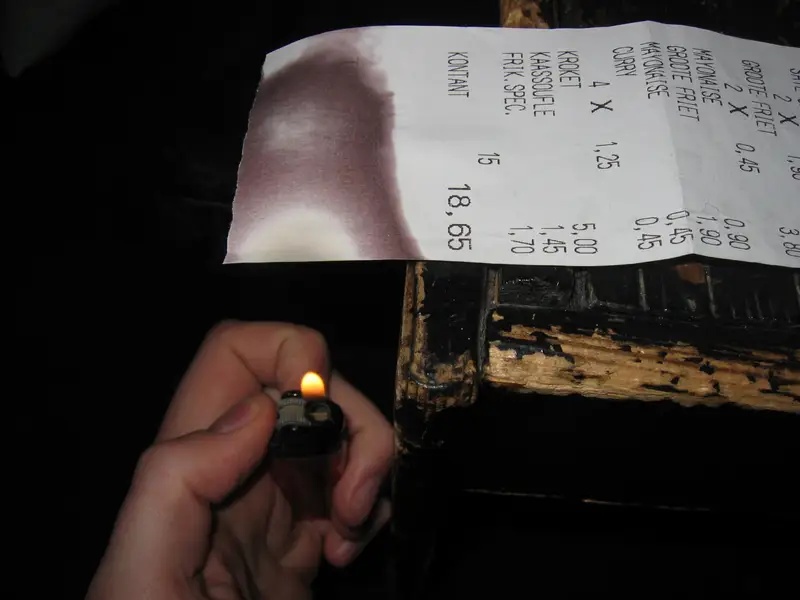
The GOV.UK pages on self-employed records do not insist on paper originals for the ordinary Self Assessment routine, and Making Tax Digital guidance speaks of keeping "original records or supporting documents (or copies of them)". Till receipts deserve a little care, though. Many are printed on heat-sensitive paper that darkens or fades, so the sensible habit is to photograph or scan them the day you get them, then file the image under its reference.

If your self-employment and property income is high enough, digital records stop being optional. Each record then needs an amount, a date and a category in compatible software. Our guide to Making Tax Digital for Income Tax sets out who is affected and when.
When something goes missing
Fires, floods and stolen laptops happen. GOV.UK's instruction is to do your best to provide figures, then tell HMRC when you file whether they are estimated or provisional. An estimate is your best guess. A provisional figure is a temporary one that you will replace with the actual number later. Bank statements can often rebuild much of the income and expense side, and a supplier or customer may be willing to send a copy of an invoice. Note what you did and how you reached each number, since you may be asked.
The first return is where gaps tend to show up, so it helps to read what happens on the Self Assessment calendar before the year is out. If your records have fallen well behind, or HMRC has opened a check, an accountant or tax adviser can look at your actual position, which a general guide like this cannot do.
General education, not personal advice. Links in this article go to the GOV.UK pages we read while writing it, opened again on 8 November 2026. Rates and rules change, so check the current figure on GOV.UK before relying on it.